


If you’ve ever spent hours refreshing a carrier portal waiting for shipment updates, you already know the problem. Container tracking software exists to fix exactly that. Whether you’re managing a handful of ocean freight shipments or hundreds of containers across multiple carriers, having the right system in place can be the difference between proactive logistics and constant firefighting.
This guide breaks down what container tracking solutions actually do, what to look for when evaluating them, and how to choose one that fits how your team works.
What Is Container Tracking Software?
Container tracking software is a tool that lets logistics teams monitor the location and status of shipping containers throughout their journey, from origin port to final destination. Instead of logging into five different carrier websites to get a fragmented picture of your shipments, a tracking platform consolidates that data into a single dashboard.
Most modern solutions connect directly to carrier APIs, port authority systems, and shipping line databases to pull real-time or near-real-time status updates. You get visibility into events like vessel departures, port arrivals, customs holds, transshipments, and estimated arrival times, all in one place.
At its core, container tracking software is about replacing guesswork with data.
Why Businesses Need Container Tracking Solutions
Shipping delays and supply chain disruptions have pushed visibility to the top of every logistics team’s priority list. But the case for investing in a container tracking solution goes beyond just knowing where a box is.
Visibility gaps cost money
When you don’t know the real-time status of a shipment, you can’t make good decisions. Teams end up over-ordering to buffer against uncertainty, warehouses get caught off guard, and customers receive delayed updates. The downstream costs, including demurrage fees, storage overruns, and emergency air freight, can add up fast.
Delays don’t announce themselves
A vessel misses a port window. A container gets rolled to the next sailing. Customs holds a shipment for inspection. Without a tracking system that flags these events automatically, your team finds out when it’s already too late to adjust. Proactive alerts give you time to act before a delay becomes a crisis.
Manual tracking doesn’t scale
Checking carrier portals one by one, updating spreadsheets, and emailing freight forwarders for status updates might work when you’re moving a dozen containers a month. It breaks down completely at higher volumes. Manual processes also introduce errors, and in logistics, a wrong ETA in a spreadsheet can cascade into serious operational problems.
Key Features to Look For in Container Tracking Software
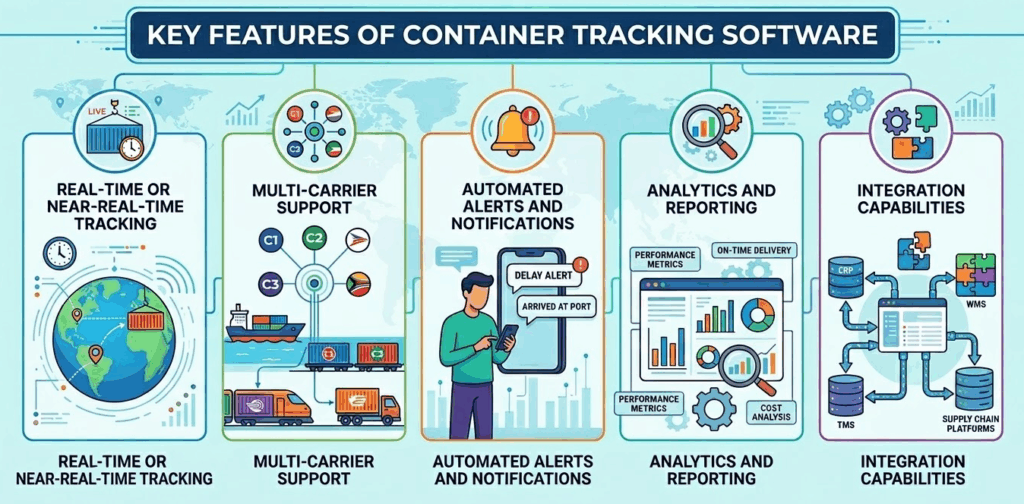
Not all tracking platforms are built the same. Here are the features that separate genuinely useful tools from ones that just look good in a demo.
Real-time or near-real-time tracking
The more current the data, the better your decisions. Look for platforms that update container status frequently throughout the day, not just once every 24 hours. For ocean freight, “real-time” often means data pulled directly from shipping line systems, rather than scraped from portals on a delay.
Multi-carrier support
If you work with more than one shipping line, your tracking solution needs to cover all of them. A platform that tracks Maersk beautifully but can’t handle MSC or Hapag-Lloyd is only solving part of your problem. Check the carrier coverage list before committing, and pay attention to how many are supported natively versus through workarounds.
Automated alerts and notifications
Your team shouldn’t have to log in every morning to check if anything changed. Good container tracking software sends automatic notifications when key milestones are reached or when something goes off-plan, such as a vessel delay, a port hold, or an arrival confirmation. Look for customizable alerts so you can decide which events matter most to your operation.
Analytics and reporting
Historical data is often overlooked, but it’s where a lot of the value lives. Which carriers have the most consistent ETAs? Which routes tend to experience delays? Which ports are causing bottlenecks? A platform with built-in analytics helps you answer these questions and negotiate better terms with partners over time.
Integration capabilities
Standalone tracking is useful, but a platform that connects with your ERP, TMS, or WMS is significantly more powerful. Look for API access or pre-built integrations so shipment data flows automatically into the rest of your logistics stack without manual imports.
Baca Juga
Top 3 Container Tracking Software in 2026
The market has grown considerably over the past few years. Here are three platforms worth evaluating, each with a distinct focus.
1. TimeToCargo
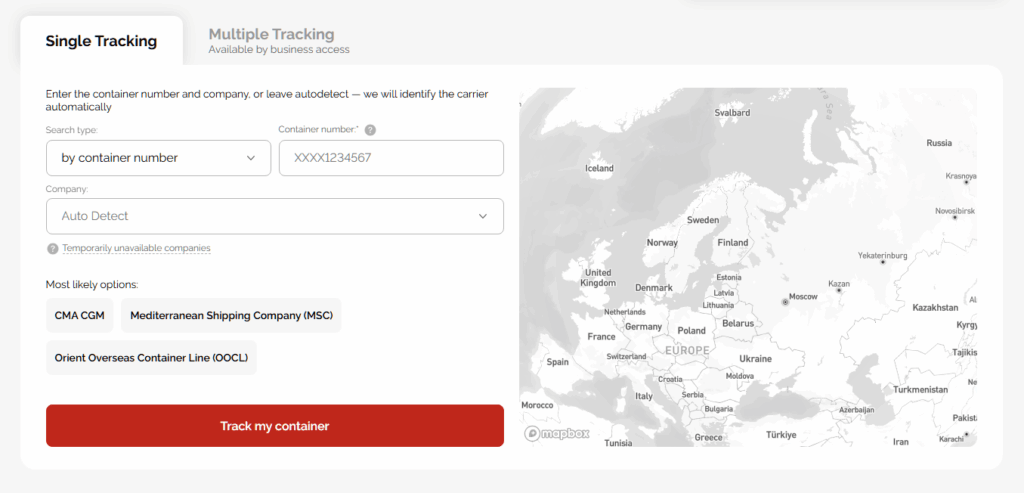
TimeToCargo is built specifically for ocean freight visibility, making it a strong fit for teams that deal heavily with sea shipments. It aggregates container status across major shipping lines and gives logistics teams a centralized view of all active shipments without the need to log in to individual carrier portals. The platform is particularly practical for teams that need clear, structured data rather than a feature-heavy interface they’ll spend weeks learning. It focuses on delivering accurate, up-to-date container status in a way that’s actually easy to act on.
2. Project44
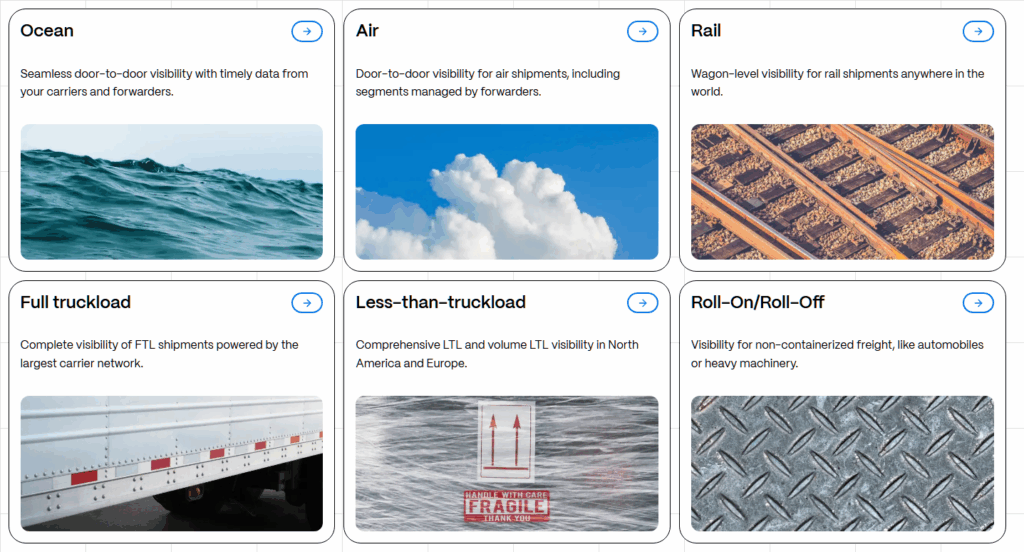
Project44 is one of the more established names in supply chain visibility and covers multiple freight modes, including ocean, air, and road. It’s a strong option for larger enterprises that need end-to-end visibility across complex supply chains and have the resources to implement and integrate a more robust platform. The carrier network is broad, and the analytics capabilities are well-developed.
3. Shipsgo
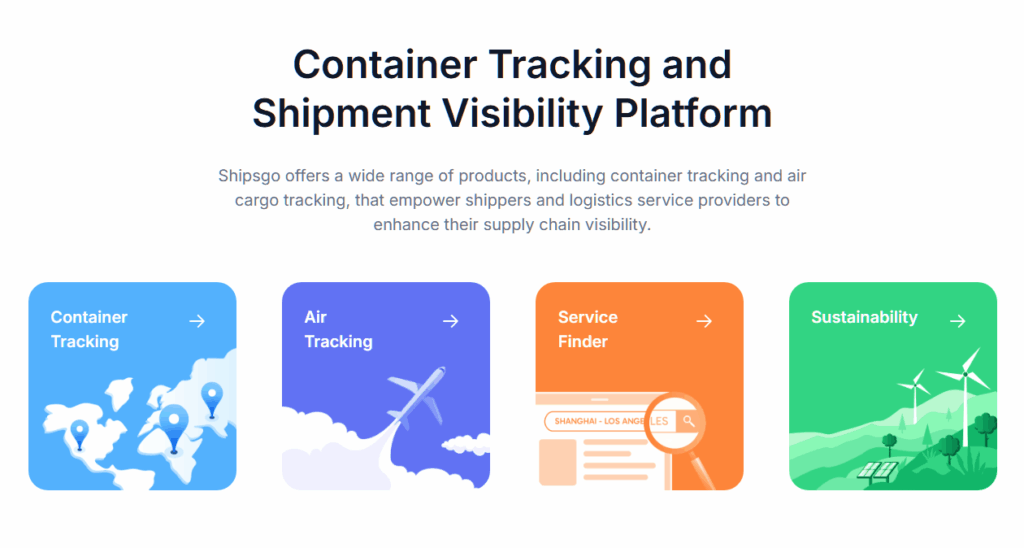
Shipsgo is a container tracking platform geared toward importers, exporters, and freight forwarders who primarily handle ocean freight. It offers a clean, straightforward interface for monitoring container status, and its pricing is more accessible for mid-size operations compared to enterprise-focused competitors. It’s a good starting point for teams looking for ocean container tracking software without the overhead of a full supply chain visibility suite.
How to Choose the Right Container Tracking Solution
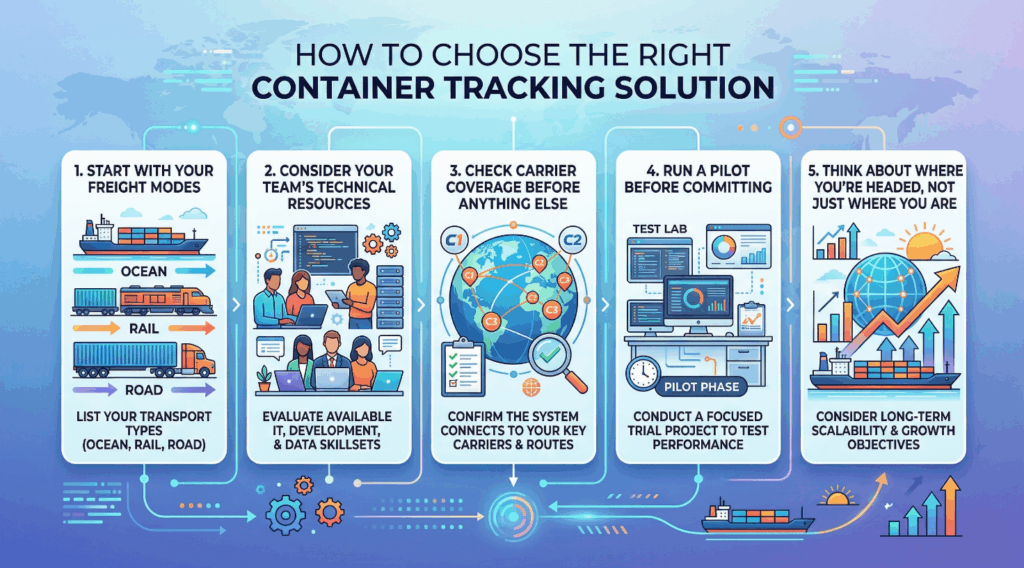
With several solid options in the market, the choice comes down to your specific situation. Here’s a practical way to think through it.
Start with your freight modes
If most of your freight moves by sea, you need a platform with deep ocean carrier coverage. If you’re managing multi-modal shipments, you need a solution that covers air and road as well. Don’t pay for features you won’t use, but also don’t choose a tool that only solves half your problem.
Consider your team’s technical resources
Some platforms require significant setup, IT involvement, and ongoing configuration. Others are designed to be operational within a day or two. Be realistic about what your team can support. A powerful but underused platform delivers less value than a simpler one your team actually relies on every day.
Check carrier coverage before anything else
List the shipping lines you currently use and verify that the platform you’re evaluating supports all of them. This is the single most common reason teams switch tools after their initial choice, coverage gaps that weren’t apparent until they went live.
Run a pilot before committing
Most reputable container tracking platforms offer a trial period or a demo with real data. Use it. Load your actual shipments and see how the data quality holds up, how often it updates, and whether the alert logic matches how your team works. A trial with live shipments will tell you more than any feature comparison chart.
Think about where you’re headed, not just where you are
A tool that handles your current volume fine might buckle if you grow 3x in the next year. Ask vendors about scalability, API limits, and how pricing changes as your shipment count increases. The best container tracking platform for your business is the one that grows with you.
Conclusion
Container tracking software has moved from a nice-to-have to a genuine operational necessity for any team managing significant freight volumes. The right container tracking solution reduces the time your team spends chasing status updates, gives you earlier warning on delays, and builds a data foundation you can use to improve logistics performance over time.
The options available in 2026 range from focused ocean freight tools to comprehensive multi-modal platforms. The best choice for your business will depend on your carrier mix, your team’s capacity, and how deeply you need the tool to integrate with your existing systems.
Start with a clear picture of your requirements, verify carrier coverage, and run a pilot with real shipments before committing. That process alone will save you from most of the mistakes teams make when choosing a container tracking platform.